Extension & Compensating

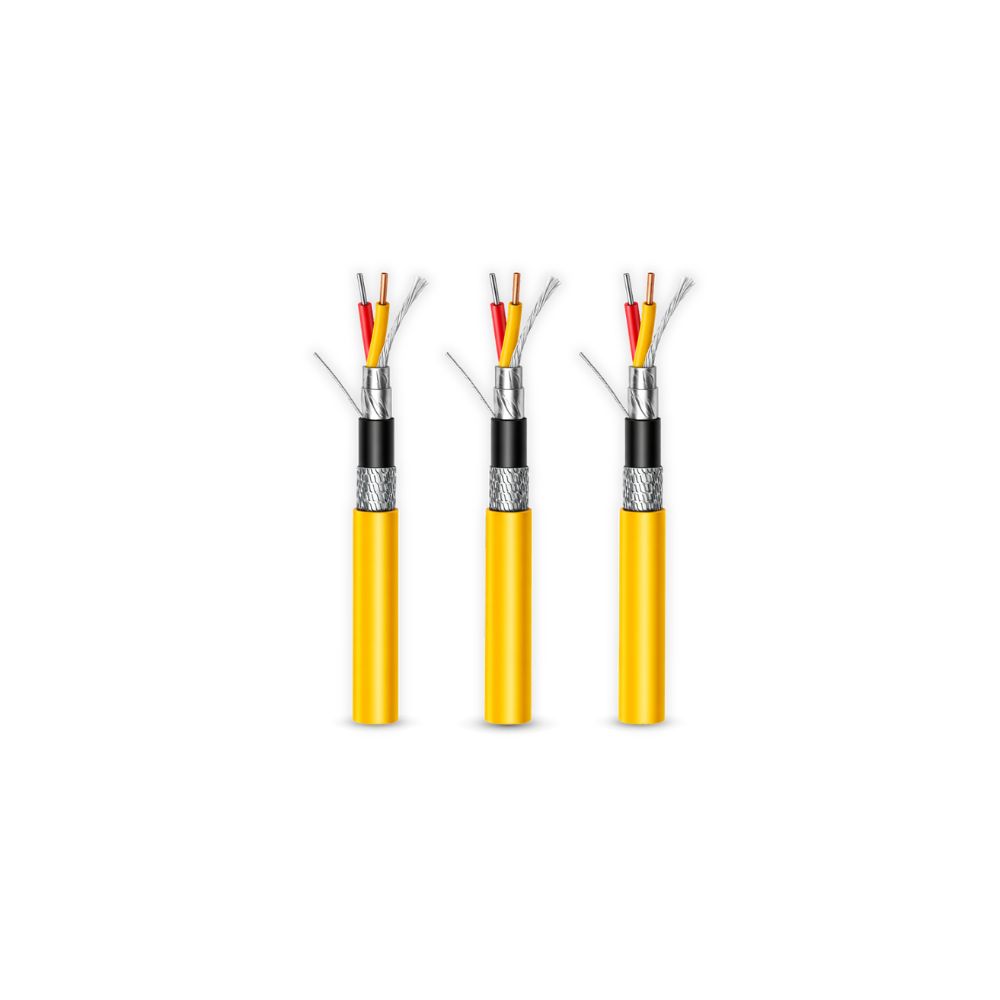
Compensating cable is a thermocouple measuring circuit cable. Wires of the compensating cable have the same electrical features, but not the same materials, as the thermo wires of the TC sensor. Compensating cable is a more cost effective solution than extension cable, but the maximum ambient temperature allowed is lower, approximately 100…200 °C depending on the insulation material.

Extension cable is a thermocouple cable which is identified by the letter X (e.g. for type K cable KX). Wires of the extension cable are of exactly the same materials as the thermo wires of the TC sensor. These cables can achieve even the same ambient temperatures as the thermocouple can.

  • Maintains accuracy of thermocouple measurements over long distances
  • Reduces signal loss and measurement errors
  • Cost-effective solution compared to using full thermocouple wire
  • Suitable for various industrial environments
  • Available in multiple insulation types for different conditions

Application-Based Customization

Engineered for Your Process Conditions

Expert Selection Support

Reliable After-Sales Service

Still Confused What to Buy?

Need help deciding? Download resources to know more about the product.

  • Flexible
  • Insulated by chemical inert materials
  • Temperature withstand capacity upto 600 Degree C
  • Power
  • Oil and Gas
  • Metal and Refractories
  • Cement
  • Chemical
  • Fertilizers
  • Paper
  • Glass and Ceramics
  • Type – Compensating & Extension
  • Core Size
  • No. of cores
  • Insulation Material
  • Braiding - Stainless Steel & Asbestos

    Comprehensive Services Using This Product

    From installation to ongoing support, we’re with you every step of the way.

    What Customers Say About Us

    Trusted Engineering Support

    The team provided clear technical guidance and practical solutions. Execution was smooth and well coordinated throughout.

    Mr. Vivek NairGeneral Manager – Operations, Cement Industry
    Dependable Technical Partner

    Their approach was systematic and aligned with our plant needs. Overall experience with product and service has been positive.

    Ms. Kavita RaoSenior Manager – Maintenance, Steel Sector
    Application-Focused Solutions

    They understood our process conditions before recommending equipment. Support during installation was handled professionally.

    Mr. Rohan MehtaProject Lead – Power Plant
    Consistent Service Delivery

    Product performance has been stable in regular operations. The support team responds in a timely manner.

    Mr. Anil DeshmukhInstrumentation Head, Process Manufacturing

    Insights & News

    Ensuring Environmental Compliance with CEMS: A Step Ahead
    Learn how Continuous Emission Monitoring Systems (CEMS) help industries stay compliant with environmental norms, providing real-time emission data, remote monitoring, and actionable insights for sustainable and responsible manufacturing.
    How Predictive Maintenance is Transforming Industrial Efficiency
    Discover how advanced monitoring tools like vibration and ultrasound solutions are helping industries move from reactive to predictive maintenance—reducing downtime, extending equipment life, and optimizing productivity across critical operations.

    Clients Who Have Transformed Their Operations with This Product

    Logo
    Logo
    Logo
    Logo
    Logo
    Logo
    Logo
    Logo
    Logo
    Logo
    Logo

    Frequently Asked Questions About This Product

    Extension cables use the same material as the thermocouple, while compensating cables use alternative materials that mimic thermoelectric properties over a limited temperature range.
    They help transmit thermocouple signals accurately from the sensing point to the measuring instrument without introducing errors.
    No, using normal cables can lead to incorrect temperature readings due to mismatched thermoelectric properties.
    Selection depends on thermocouple type, temperature range, environment, and installation conditions.
    Common insulation types include PVC, XLPE, PTFE, and fiberglass, chosen based on temperature and environmental requirements.

    Download Resources

    Send Us Your Requirements

    We will respond you soon.

    Share:
    Send Us Your Requirements

    Fill the form to download resources

    Send Us Your Requirements

    We will respond you soon.